Singapore’s Vivian Balakrishnan on AI, China, and Global Competition
The world is moving at break‑neck speed. From a 1‑2 % share of global GDP in 1956 to a dominant economic force today, China and the United States are now racing each other on the same AI stack. In a recent Asia Society conversation, Singapore’s Foreign Minister Vivian Balakrishnan and former Australia’s Prime Minister Kevin Rudd dissected why this moment feels like watching a “once‑in‑a‑lifetime tectonic shift” from the ringside… and why Singapore is already in the arena.
A New Geopolitical Landscape
- Pax Americana built the post‑WWII prosperity that lifted Germany, Japan and later, Singapore.
- The U.S.–China rivalry is now the primary driver of economic dynamism in Southeast Asia.
- Tariff sprees, 301 investigations, and chokepoints such as the Strait of Hormuz have turned the global supply chain into a high‑stakes obstacle course.
Takeaway: Growth in the region is not happening in spite of these tensions—it is being shaped by them.
Southeast Asia’s Surprising Momentum
The first half of 2026 shows Vietnam sprinting at 8 % growth, while Singapore, Malaysia and Indonesia hover around 5 %—a remarkable feat for economies already enjoying high per‑capita incomes. Singapore’s per‑capita GDP has exploded from US $500 (1965) to US $80,000 today, underscoring a trajectory few could have imagined.
Lesson: Policy can turn “risk” into “opportunity” if the right mix of openness, talent and technology deployment is in place.
The AI Stack Is Universal
Both the U.S. and China are building on the same mathematical foundation: partial differentiation, back‑propagation, and pattern recognition. The “lead” is now a matter of months, not decades. This convergence means that the future competitive edge will derive from people, data, and governance, not just raw compute.
China’s Competitive Edge – Beyond Subsidies
China’s industrial subsidies (OECD estimates 20‑27 %) are real, but they only tell part of the story. A hyper‑competitive domestic market, aggressive state‑driven R&D, and a massive internal demand base amplify the impact of that support.
Implication: Simple anti‑subsidy arguments miss the deeper dynamics of domestic competition and talent pipelines.
Demographic Headwinds
Super‑aged societies—where ~25 % of the population is over 65—reshape consumption, investment and labour supply. In China, a 1.5 % birth rate (declining) amplifies the urgency to embed embodied AI and robotics into production lines.
Singapore’s Pragmatic AI Playbook
- Task‑Based Reskilling – Jobs are “menus of tasks”. Singapore teaches workers to adapt each sub‑task to AI, rather than clinging to outdated roles.
- Welfare‑Focused Deployment – The aim isn’t to preserve jobs at all costs but to safeguard worker welfare through continuous learning.
- Balanced Regulation – Vivian likens AI development to driving a high‑performance car: you need a powerful engine (innovation) and brakes, seat belts, and traffic rules (regulation, standards, risk‑management).
The Governance Gap – Guardrails Too Thin
Three core AI risk buckets emerged:
- Loss of Control: Even creators cannot guarantee a perfect kill‑switch.
- Weaponisation: Biotech, chemical and AI tools could fall into rogue hands.
- Societal Disruption: Deepfakes and algorithmic bias erode trust and polarize politics.
Vivian calls for a UN/ITU AI convention—a global “highway code”—to embed safety, transparency, and accountability into the fabric of AI development.
Open vs. Closed Models – A New Patent‑Trademark Analogy
- Open‑weight models act like patents: they disseminate knowledge, spur collective progress, and eventually transition to commercial advantage.
- Closed models resemble trademarks: they protect a competitive edge but can stifle broader innovation.
Balancing both will be essential for a thriving, inclusive AI ecosystem.
What Can Leaders Do Now?
- Invest in lifelong learning platforms that break jobs into AI‑ready tasks.
- Create cross‑regional pilot programs for AI standards (ASEAN‑EU, ASEAN‑US).
- Encourage open‑research collaborations while safeguarding critical national security domains.
- Develop “AI insurance” mechanisms akin to car insurance—risk pooling and liability frameworks for autonomous systems.
Conclusion
The world stands at the cusp of a new gilded age powered by AI, biotech, and clean energy. Singapore shows that a small state can punch above its weight by marrying relentless technological adoption with a human‑centric, welfare‑first policy lens. The stakes are high, the risks real, but with the right guardrails, the ride can be exhilarating rather than terrifying.

The Rise of Beidou: China’s Game-Changing Navigation System

China’s AI Agent Playbook
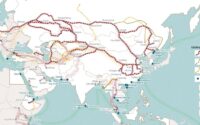
Accusation of Debt Trap Diplomacy – Belt and Road Initiative (BRI)
About The Author
