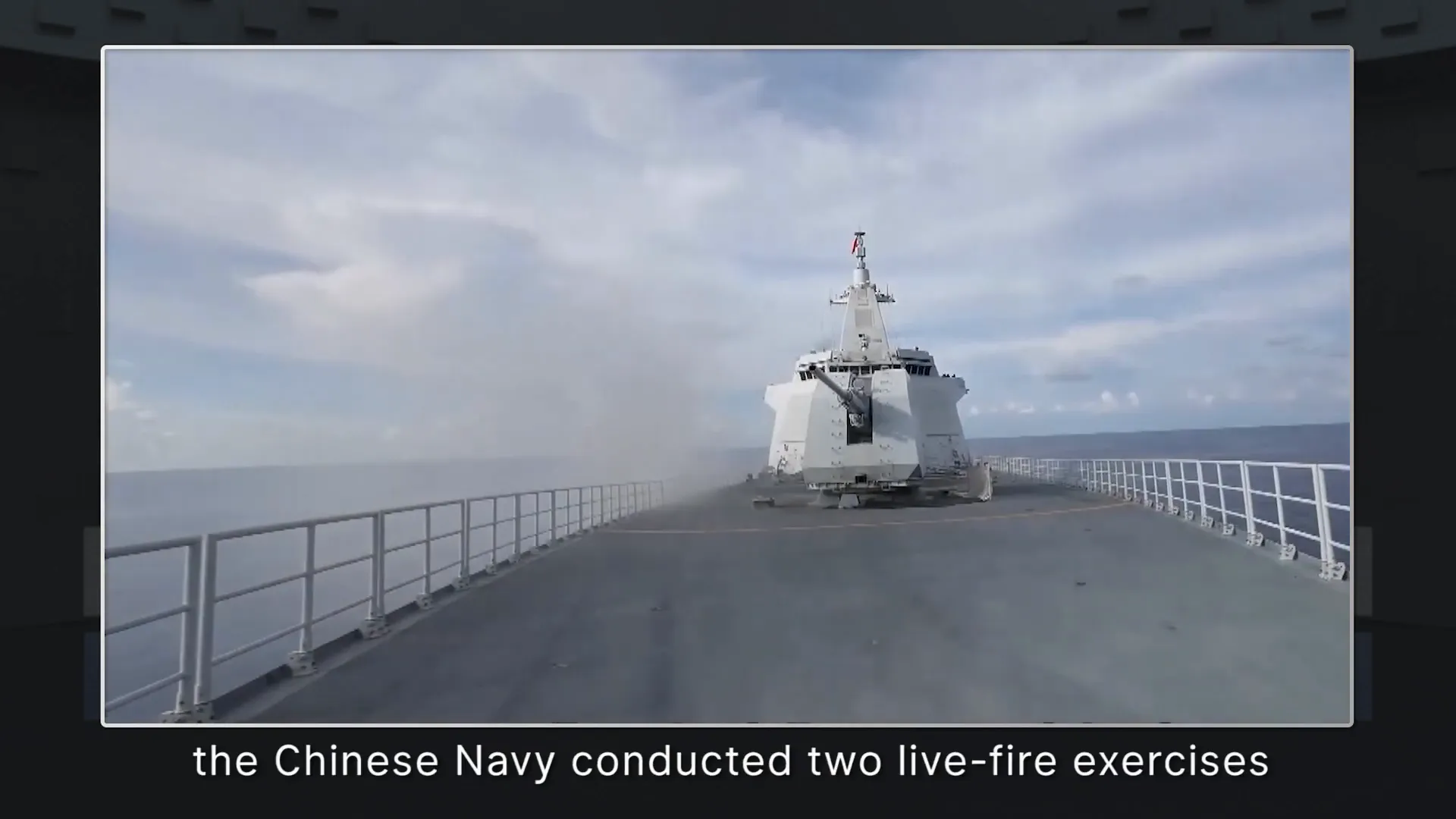
Chinese naval live-fire drill at Tasman Sea
🌊 Chinese Naval Exercises: A Provocation or a military response?
In the ever-evolving landscape of international relations, few regions are as contentious as the South China Sea. A recent incident involving an Australian Royal Air Force P-8A surveillance aircraft and the Chinese military has escalated tensions, revealing the complexities of power dynamics in the region. This blog post delves into the events of February 2025, exploring the implications of military maneuvers, national pride, and the shifting balance of power between Australia and China.
On February 11, 2025, the P-8A took off from Clark Air Base in the Philippines and made a sharp turn northwest towards China’s West Sand Islands, which include the Xisha Islands. The flight was not just a routine patrol; the P-8A is equipped with advanced surveillance technology designed for anti-submarine warfare and reconnaissance.
As the P-8A crossed into Chinese airspace, alarms rang out across the People’s Liberation Army (PLA). In response, the PLA scrambled two J-16 fighter jets, which approached the P-8A at supersonic speeds, launching infrared flares in a show of force. The Australian pilot, caught in a high-stakes game of cat and mouse, had no choice but to retreat, marking a dramatic 18-minute confrontation that underscored the rapid response capabilities of the Chinese military.
Just two days later, China sent a powerful naval fleet into the Tasman Sea, comprising advanced destroyers and a supply vessel. This show of strength included live-fire drills and the establishment of a 40-nautical-mile warning zone, sending shockwaves through Australia. The Australian government, caught off guard, scrambled to respond diplomatically, but the narrative quickly shifted to portray China as the aggressor.
The Australian media and politicians reacted with significant concern and criticism following the incidents involving the Chinese military. The media coverage was intense, with 24/7 reporting on the situation, portraying China as a menace and emphasizing the disruption caused by the live-fire drills near Sydney. There was a strong narrative that highlighted the perceived threat to national security and the need for Australia to respond decisively.
It’s been naval and air patrols and military exercises conducted at South China Sea and near the shores of China for decades including its EEZ (<200 nautical miles). A quick summary of recent naval and air military exercise and patrols with Australia military involvement near China’s shores:
| Operation/Incident | Date | Approx. Distance from China’s Shore | Location / Island(s) involved |
| P-8 Poseidon Reconnaissance Patrol | April 15, 2023 | ~120 nautical miles (220 km) | Spratly Islands region |
| Joint US–Australian Intelligence, Surveillance & Recon Exercise | September 10, 2023 | ~100 nautical miles (185 km) | Scarborough Shoal vicinity |
| P-8 Surveillance Mission (operation name not disclosed) | January 22, 2024 | ~130 nautical miles (240 km) | Paracel Islands region |
| Maritime ISR Deployment by the ADF | June 05, 2024 | ~110 nautical miles (203 km) | Natuna Islands vicinity |
| Combined Exercise Incorporating ISR Components | August 18, 2024 | ~115 nautical miles (213 km) | Spratly Islands region |
| Joint Naval Exercise – US, Philippines, Japan & Australia | February 7, 2025 | ~100 nautical miles (185 km) (estimated) | South China Sea region (specific location unspecified) |
| P-8A Spy Plane Overflight of Xisha Island | February 11, 2025 | ~125 nautical miles (232 km) | Xisha Island (Paracel Islands) |
⚓ The Australian Media went amok in fearmongering
Despite the standard practice of notifying surrounding nations of military exercises, the Associated Press (AP) falsely claimed that airliners were warned of a “secret” live-fire exercise. In stark contrast, the Sydney Morning Herald reported that the Australian military had detected the ships a week prior and that China had issued safety warnings through radio broadcasts to airlines like Jetstar, Virgin, and Emirates.
This communication was not hidden; it was accessible to anyone with a radio, including fishermen and pilots. So, how did the AP label it a secret? The perplexing nature of this response highlights a growing tension in the narrative surrounding China’s military actions.
Australian politicians, including Shadow Minister for Defense Andrew Hasty, branded the Chinese military exercise as a provocation. However, Andrew Wallace, deputy chair of the Parliamentary Joint Committee on Intelligence and Security, pointed out the hypocrisy of Australia criticizing China while conducting its own military operations far from its shores.
Hasty’s assertion that China is using gunboat diplomacy to test U.S. allies like Australia raises eyebrows, especially considering Australia’s attempts to prove its loyalty to the United States. However, it seems that the U.S. does not view Australia as an equal ally. Australia, now a member of AUKUS, has entered a contract to acquire second-hand nuclear submarines to obtain three U.S. Virginia-class submarines for a staggering $368 billion.
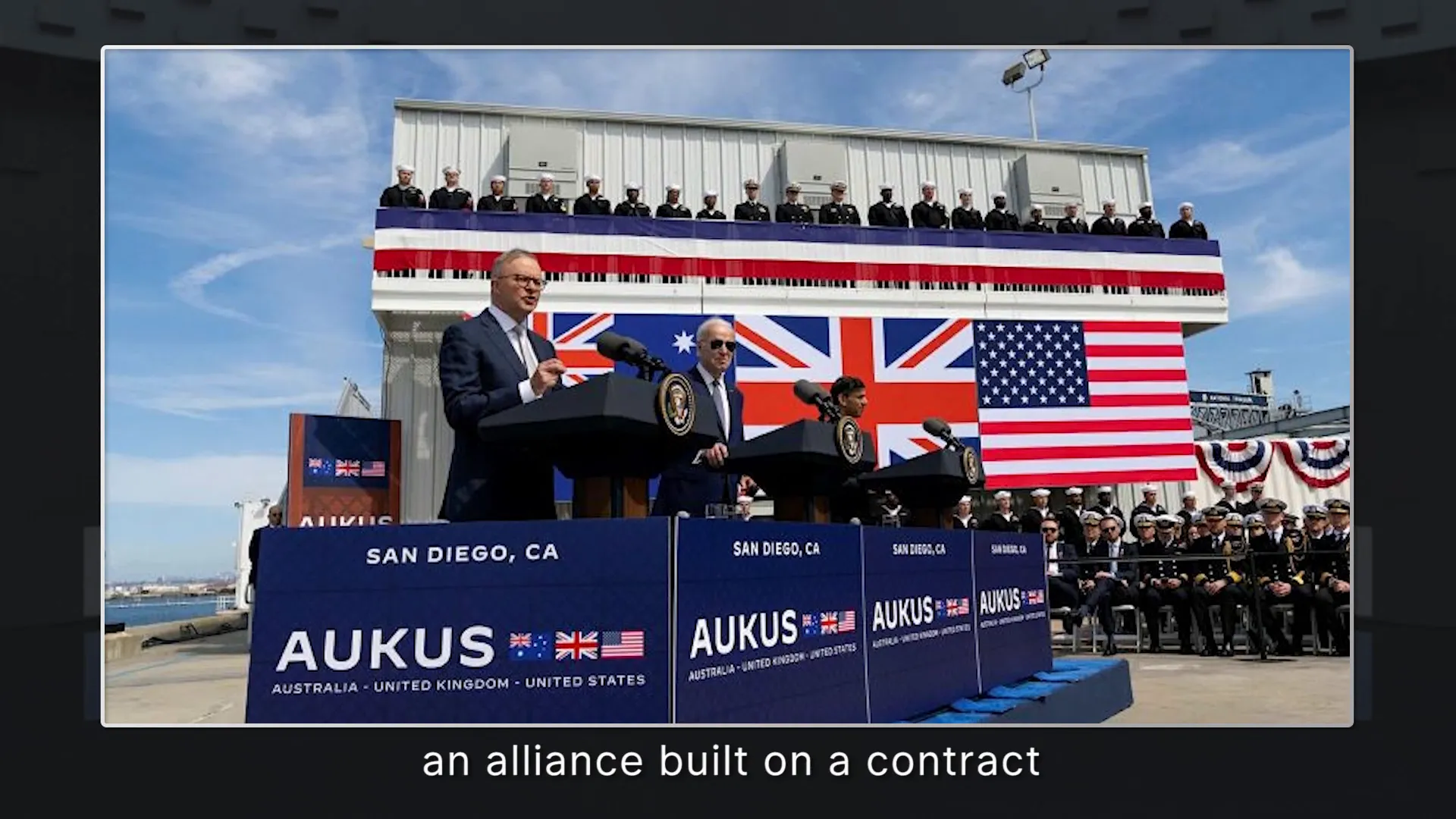
Yet, despite these lofty expectations, a report from the U.S. Congressional Budget Office indicates that the Columbia-class submarines are the Navy’s highest acquisition priority. This means that selling submarines to Australia might reduce the number of attack submarines available to the U.S. Navy, effectively telling Australia to wait their turn.
Australian Green Senator David Shoebridge deemed this report damning, arguing that it shows Australia’s nuclear submarine plans are unraveling. With about $3 billion already invested in the first four years, the U.S. shipbuilding industry is nowhere near producing enough nuclear submarines to meet demand. Finding an alternative supplier is also not an easy task, especially after the contract with France was abruptly canceled in 2021.
On February 22nd, Australian Prime Minister Anthony Albanese reiterated that China had adhered to international law, emphasizing that no Australian assets were in danger. Defense Minister Richard Marles confirmed that Chinese ships did not enter Australian territorial waters. New Zealand’s Prime Minister Christopher Luxon also stated that there was nothing illegal about the exercises but added that a bit more advance notice would be appreciated.
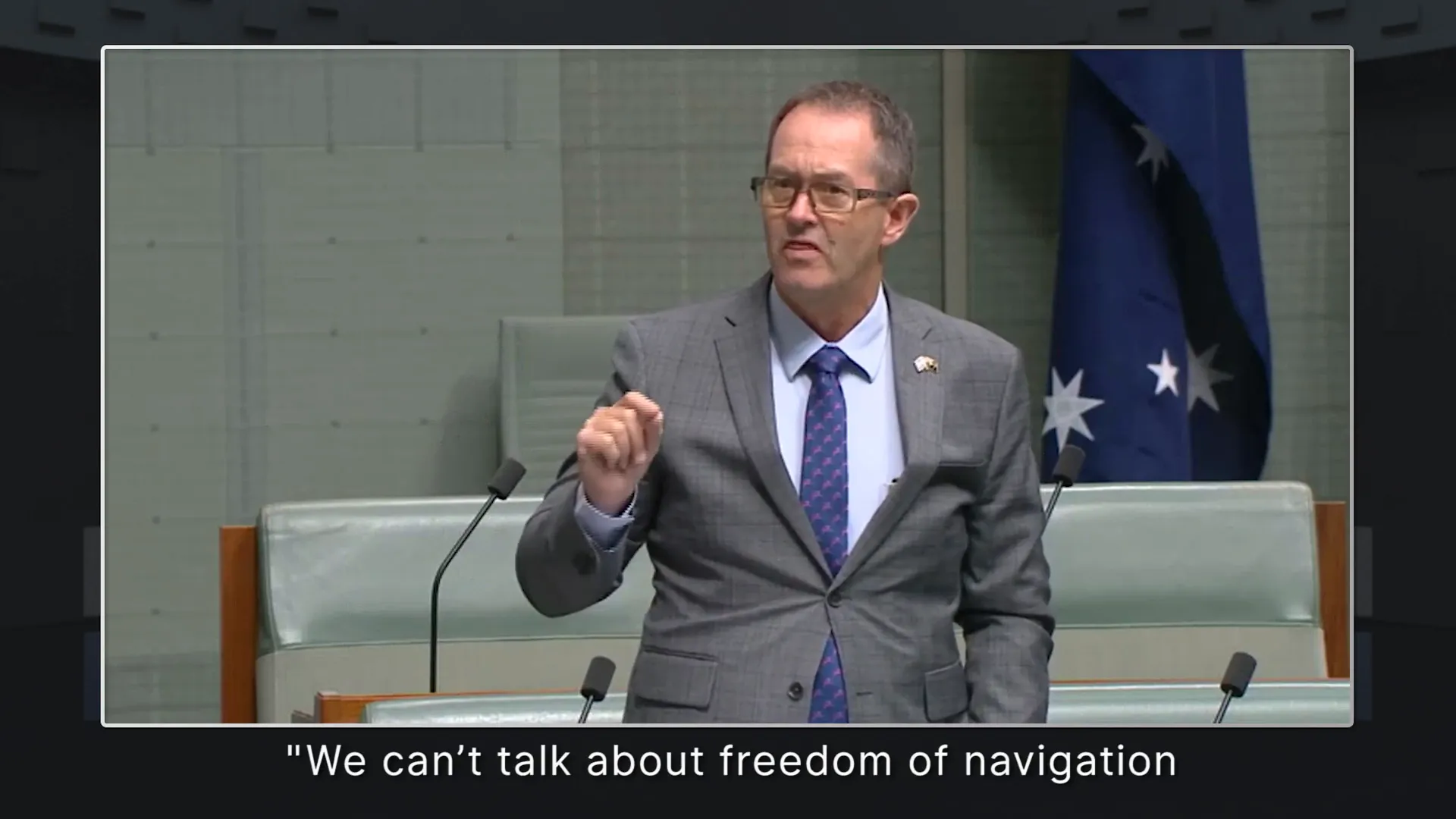
Australian senator Anrew Wallace said “We can’t talk about freedom of navigation in the South China Sea and then criticise China over an exercise like this they haven’t done anything wrong.”
So, it’s really up to the readers to make a personal judgement, is this recent Chinese live-fire drill a provocation or a military response. Disregard what, Australia has apparently invited its biggest trading partner to its shore not just economically but militarily.
Further reading:
Is democracy the answer to world peace?

An Australian Veteran’s Walk on the Nanjing Wall – Why the Far‑East Story of World War II Is Still Being Erased

Singapore’s Vivian Balakrishnan on AI, China, and Global Competition
About The Author
