The Rise of China: A New Era of Global Power Dynamics

As we step into 2025, the world is witnessing a seismic shift in the balance of power. Once considered a distant third in military might behind the United States and Russia, China has rapidly ascended to a position that has many questioning the status quo. The events of the past few years have not only showcased China’s military advancements but also its ability to respond to crises and its dominance in industrial output. This blog post will explore the key developments that have contributed to China’s rise and what it means for the global landscape.
- Military Power Shift:
-
- In 2015, China’s military was perceived as the third strongest in the world, behind the US and Russia.
-
- By 2024, perceptions shifted, with China being viewed as the second military superpower, closely trailing the US.
- Space Exploration:
-
- In June 2024, China successfully landed its Chamas 6 mission on the far side of the moon, specifically in the South Pole-Aitken Basin.
- Military Technology:
-
- In December 2024, China revealed two 6th generation fighter jets, prompting a significant response from the Pentagon.
- Military Exercises:
-
- In July 2024, China sent its 055 class destroyer to conduct inspections near US waters in Alaska.
- Cultural Influence:
-
- In August 2024, China’s AAA game “Wukong” shattered global game sales records, highlighting China’s influence in pop culture and technology.
- Missile Precision:
-
- In September 2024, China’s Dongfeng express missile successfully hit a target in the Pacific Ocean, with minimal global reaction.
- Disaster Response Efficiency:
-
- On January 7, 2025, a 6.8 magnitude earthquake struck Tibet. China’s response included:
-
-
- Drones deployed within 10 minutes.
-
-
-
- Military and police on the ground within 15 minutes.
-
-
-
- Rescue teams clearing rubble within 30 minutes.
-
-
-
- Supplies delivered by Y-20 transport planes within 5 hours.
-
-
-
- Power restored within 6 hours and communications within 10 hours.
-
-
-
- Residents receiving hot meals and students returning to school by the end of the night.
-
- Comparison with US Response:
-
- On the same day, Los Angeles faced wildfires, with a sluggish response from the federal government and local authorities struggling to manage the situation.
- Industrial Output:
-
- In 2024, China’s industrial capacity accounted for 35% of the world’s total, projected to rise to 45% by 2035.
- Energy Production:
-
- China is leading in renewable energy initiatives and hydropower projects, such as the Matua hydroelectric station.
- Steel Production:
-
- China is the largest producer of steel globally, with significant output from regions like Hebei and Tangshan.
- US Officials’ Acknowledgment:
-
- Antony Blinken, the US Secretary of State, stated that the US cannot beat China on its own, indicating a recognition of China’s strength.
The evidence is clear: the world is changing, and China’s rise is reshaping the global power dynamics. From military advancements and crisis response to industrial output, China is positioning itself as a formidable force on the world stage. As we move forward, it is essential to recognize the implications of this shift and consider how nations will adapt to a new era where China is no longer just a contender but a leading power. Whether we embrace this change or resist it, the facts speak for themselves, and the future will undoubtedly be influenced by China’s growing influence.

Navigating the Future: China’s Economic Strategy in a Changing World

How China is Redefining Global Tech Innovation
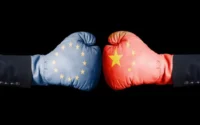
Europe’s strategic interest against the backdrop of China’s rise and the Ukraine’s war
About The Author
