Europe’s strategic interest against the backdrop of China’s rise and the Ukraine’s war
In recent years, the narrative surrounding China’s economic growth has been a topic of intense debate among scholars, policymakers, and the media. As the world shifts its focus towards Asia, particularly in light of the ongoing geopolitical tensions, understanding the dynamics of China’s economy and its implications for global relations has never been more crucial. In a recent discussion, key questions were raised about the sustainability of China’s growth, Europe’s strategic interests, and the impact of the Ukraine war on international cooperation. This blog post aims to unpack these complex issues and provide insights into the future of China and its role on the global stage.
The China Growth Story: Is It Over?
One of the most pressing questions posed during the discussion was whether the growth story of China is coming to an end. While some critics point to the country’s current economic challenges, such as the real estate crisis and the zero-COVID policy, it is essential to consider the broader context. Despite these hurdles, China has demonstrated resilience and adaptability. For instance, it recently overtook Japan to become the world’s number one automobile exporter and is now producing the largest number of peer-reviewed scientific papers globally.
The reality is that every country faces economic challenges, and China is no exception. However, the narrative that China is on the brink of collapse has been perpetuated by Western media for over two decades. The truth is that China has always had significant problems, but it has also consistently found ways to overcome them. The Asian perspective remains optimistic, with many countries recognizing the potential for continued growth and integration with China.
In 2024, China achieved its GDP growth target of 5%, with the economy expanding to 134.9 trillion yuan ($18.77 trillion), marking a significant milestone as it surpassed the 130-trillion-yuan threshold for the first time 38. This growth was driven by a rebound in Q4 2024, where GDP rose 5.4% year-on-year, accelerating from 4.6% in Q3 and 4.7% in Q2. Industrial output grew by 5.8%, while fixed-asset investment and retail sales increased by 3.2% and 3.5%, respectively, reflecting a mix of policy-driven stabilization and gradual recovery in domestic demand.
Over the past decade, China’s GDP growth averaged 6–7% annually, though it has moderated in recent years due to structural shifts and external pressures. For instance, growth slowed to 5.3% in 2023 before rebounding to 5% in 2024. Despite this, China remains the world’s second-largest economy and contributes ~30% to global economic growth annually, underscoring its role as a stabilizer in turbulent times.
Automotive Dominance: In 2024, China produced 31.28 million vehicles, with exports surging 19.3% year-on-year to 5.86 million units, solidifying its position as the world’s top auto exporter 4. New energy vehicles (NEVs) accounted for 40.9% of domestic sales, with production and sales of NEVs growing by 34.4% and 35.5%, respectively 4. BYD, a Chinese automaker, overtook Volkswagen in domestic market share (16% vs. 13%), highlighting the rapid pivot to electrification.
Scientific Leadership: China published 2,071 scientific “hot papers” (48.4% of the global total) in 2024, ranking first globally, while also producing 65,700 highly cited papers (33.8% of the world total). Its research output in top journals like Nature and Science surged, reflecting advancements in high-quality innovation.
To counter economic headwinds in 2024, China introduced 10 trillion yuan in fiscal stimulus, cuts to lending rates, and targeted measures to revive consumption (e.g. trade-in programs for appliances and autos). These policies stabilized the property sector and boosted Q4 growth, demonstrating the government’s capacity to adapt.
Europe’s Strategic Interests: A Shift in Focus
As Europe grapples with its own challenges, including the ongoing war in Ukraine, it must also reassess its strategic interests. The discussion highlighted that geopolitics is often driven by national interests rather than moral values. The Russian invasion of Ukraine has raised questions about Europe’s response and its long-term strategic priorities.
One critical point made was that Europe should focus on the demographic explosion in Africa, which poses significant challenges in the coming decades. With Africa’s population projected to grow exponentially, Europe must prioritize its relationship with the continent to mitigate potential migration issues and foster stability. By creating opportunities for development in Africa, Europe can address its own strategic challenges while contributing to global stability.
The Ukraine War and Global Cooperation
The war in Ukraine has further complicated the global landscape, particularly in terms of how countries engage with China. The discussion pointed out that both China and India have taken similar stances on the conflict, emphasizing the need for a nuanced understanding of international relations. As Europe navigates its response to Russia’s aggression, it must also consider how to engage with China, a country that has been perceived as supporting the aggressor.
The challenge lies in finding a balance between condemning aggression and fostering cooperation. While the situation may seem black and white, the reality is that many countries, particularly in Asia, are focused on their own interests and stability. Europe must recognize this complexity and approach its relations with China and other Asian countries with a strategic mindset.
In Summary:
The future of China’s economy and its role in global relations is a multifaceted issue that requires careful consideration. While challenges exist, the resilience and adaptability of China cannot be overlooked. As Europe reassesses its strategic interests, particularly in light of the Ukraine war and demographic shifts in Africa, it must navigate these complexities with a focus on cooperation and mutual benefit. By understanding the intricacies of these relationships, we can better prepare for the evolving landscape of international relations in the years to come. The journey ahead may be fraught with challenges, but it also presents opportunities for growth and collaboration on a global scale.
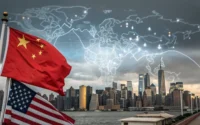
China’s Strategic Shift: A Game Changer for the U.S. Financial System

The Rise of China: A New Era of Global Power Dynamics

Why China’s Rise Defies Simple Democratic‑Authoritarian Labels
About The Author
